Whitby in Winter: Where to Stay When the Town Goes Quiet
 2 The Square, Grassington: Honest Verdict for Solo Young Travellers
Between November and March, Whitby sheds its queues and keeps its sea air — a practical guide to the quieter season, from the abbey steps to the best streets for a winter room.
What Winter Actually Changes in Whitby
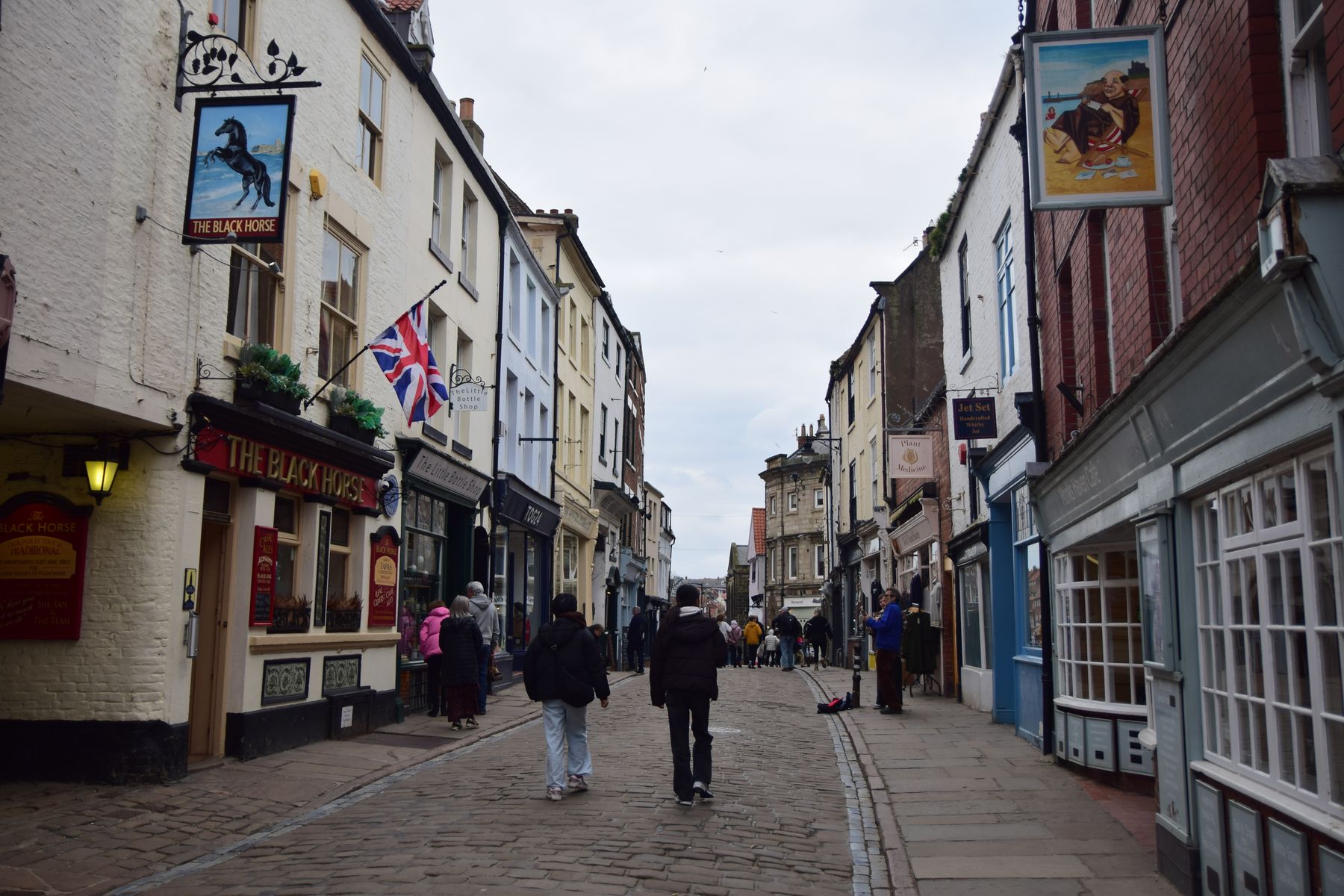
The biggest shift is on the streets themselves. Church Street, the narrow lane running up to the abbey, is shoulder-to-shoulder in August and pleasantly walkable in January. The 199 steps stay open all year, and on a clear cold morning you can climb them with only a handful of other people for company. The abbey ruins, cared for by English Heritage, keep reduced winter opening hours, so check before travelling rather than assuming a full day out. The beach at Tate Hill and the long West Cliff sands remain open and free, and low-season dog rules are more generous than summer ones.
Weather is the honest trade-off. Coastal North Yorkshire in winter means short daylight, frequent wind and rain that arrives sideways off the North Sea. But the reward is atmosphere: mist sitting on the harbour mouth, the swing bridge creaking over the Esk, and pubs along Church Street with fires lit and space at the bar. Sea air in February is bracing in the best sense. Bring waterproof layers and boots rather than an umbrella, which the wind will simply remove. Most attractions run Friday-to-Sunday hours, so a midweek break suits walkers more than sightseers.
The Harbour, the West Cliff and Where to Sleep
Whitby splits neatly for accommodation. The old town, on the east bank around Church Street and Sandgate, puts you among the cottages, the Black Horse and the White Horse & Griffin, with the abbey above. Rooms here are characterful and often small; some streets are steep and cobbled, which matters if you have heavy luggage. The West Cliff, above North Terrace and along Royal Crescent, is the classic hotel district — bigger buildings, sea views across the harbour, a five-minute walk down to the beach and the whalebone arch.
My pick for a winter booking is the West Cliff. In low season, sea-view rooms there are the ones that drop hardest in rate, and you get the drama of the weather from indoors rather than through a single glazed window on Church Street. East-bank cottages are lovely for a two-night stay in summer; in January the walk back up from the harbour after dinner is cold and dark. Aim for a room above the first floor on the seafront where possible — ground-floor rooms on North Terrace can feel exposed to spray.
Beyond the town centre, three options suit different trips. Ruswarp, a village about a mile and a half up the Esk, has quieter guesthouses and the riverside walk to the abbey from the south. Sandsend, roughly three miles northwest along the A174, offers beach-level stays and a good pub, with Whitby a short drive or a bracing clifftop walk away. Stay elsewhere in the North York Moors — Pickering, 18 miles southwest, or Grosmont, seven miles up the Esk Valley line — if you want walking first and the sea second. The Esk Valley railway from Middlesbrough to Whitby is one of the finest winter train journeys in England; sit on the left coming in.
Eating, Walking and What to Skip
Winter food in Whitby is about warmth rather than ceremony. Smoked kippers from the traditional smokehouses on Henrietta Street are the local staple; buy them to cook if your room has a kitchen, or find them on breakfast menus. Pubs along Church Street and the Black Horse on the same lane serve generous plates without summer pricing pressure. Book dinner on Friday and Saturday nights even in winter — the town is quieter but not empty, and a handful of places close entirely in January for their own break, so check ahead rather than turning up.
For walking, the Cinder Track to Robin Hood's Bay is about six and a half miles of former railway line, largely sheltered and manageable in winter if you start early and carry a torch for the return. The Cleveland Way clifftop section north towards Sandsend is shorter and more exposed; save it for a clear day. Skip the beach donkey rides, the pleasure boat trips and the outdoor pool — all summer concerns. Also skip trying to do the moors and the coast in one day; the roads across to Pickering take around 40 minutes and winter light fails by half four.
When to Go and How to Book
Late November and early December bring the town's festive weekends, which fill rooms fast; book those well ahead or avoid them if you want quiet. Mid-January to mid-February is the genuinely quiet window — some cafes shut, but rates are at their lowest and the abbey and harbour are yours. March brings longer light and the first spring walkers. Whenever you come, book direct or through a booking site with free cancellation, because coastal weather can rewrite a travel plan at short notice, and confirm winter opening hours for anything you specifically want to see.
A sensible winter stay is two or three nights: one for the abbey and old town, one for a coast walk, one spare for weather. Travel by train where you can — Whitby station sits just off Station Square, a few minutes from the harbour — and use the bus or a car for Sandsend and the moors. Fill the kettle, buy kippers, and let the town be quiet; that is the whole point of coming now rather than in July.
Before you book
The questions people ask about Grassington, answered with this month’s numbers.
Yes, if you want atmosphere over attractions. The streets and abbey steps are quiet, pubs are warm, and sea views are dramatic. Expect wind, rain and short days, and check reduced opening hours at the abbey and museum before you travel.
The West Cliff, around Royal Crescent and North Terrace, suits winter best: larger hotels, sea views and lower low-season rates. The old town around Church Street is characterful but steep and cobbled, and the walk back from dinner is cold after dark.
The Esk Valley line runs from Middlesbrough through Grosmont to Whitby station near the harbour, and is scenic in winter. Buses connect Whitby with Scarborough and the moors. Sandsend and the more remote coast spots are easier with a car or taxi.